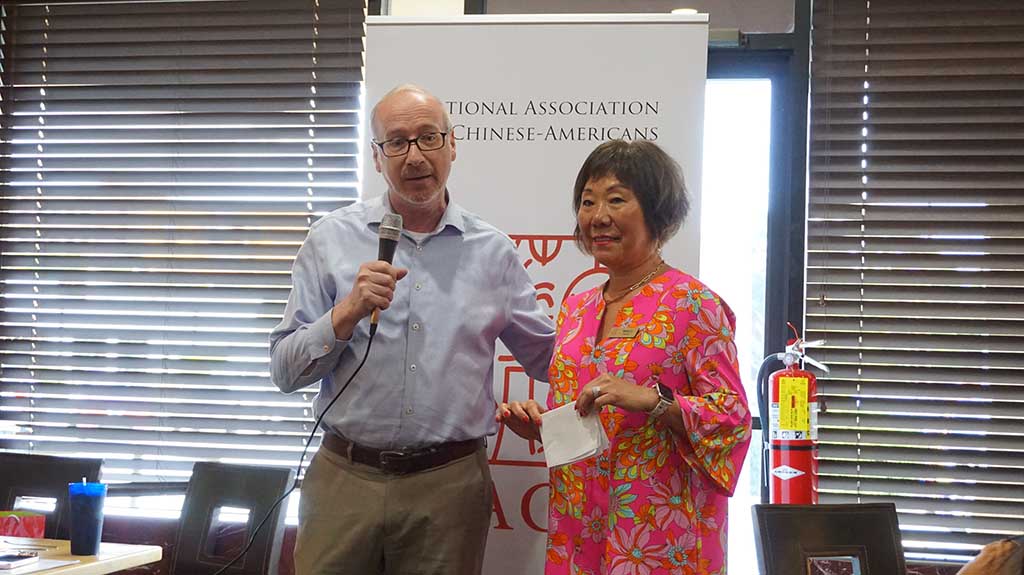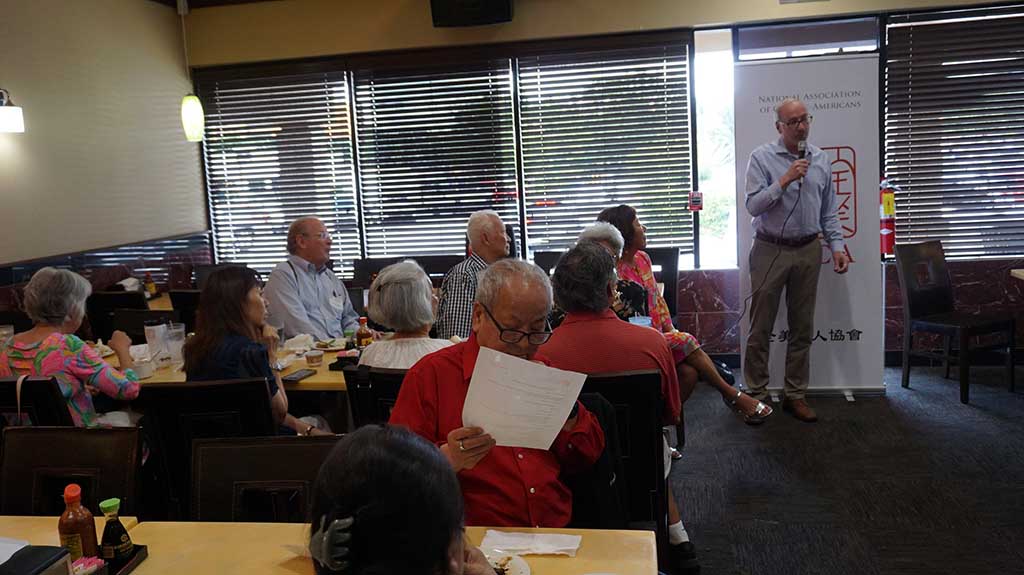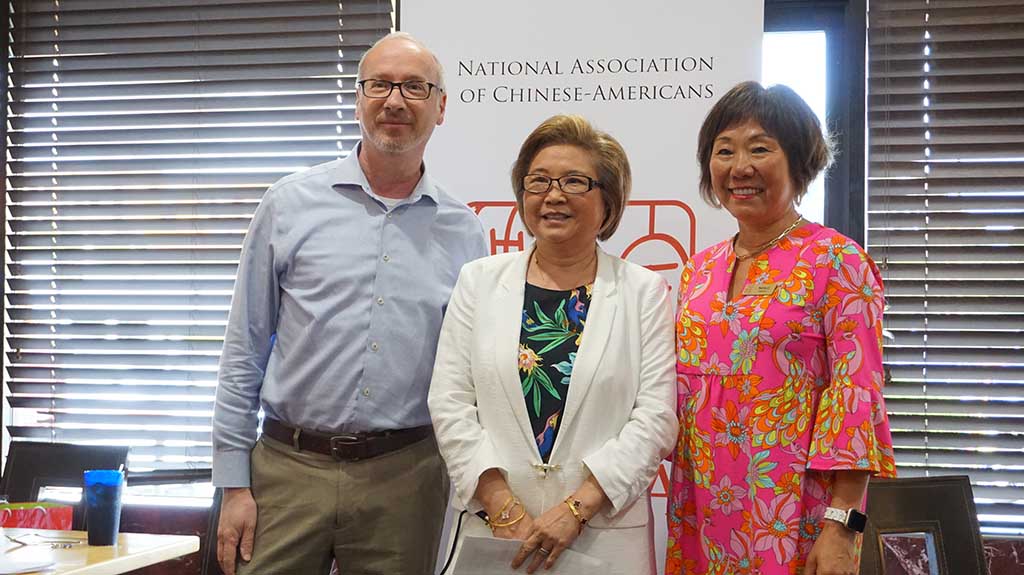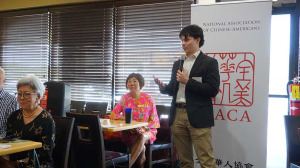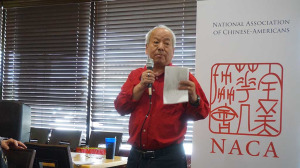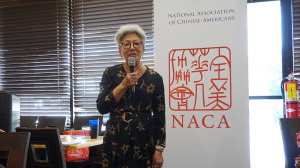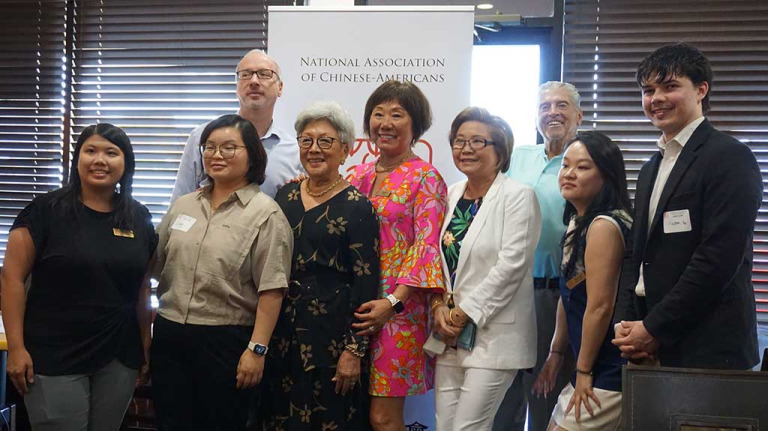
Duluth, May 30, 2026 – The National Association of Chinese Americans held its annual meeting at a restaurant, electing Nellie Li as president, Carol Nguyen as treasurer, and Lani Wong as chairperson.
Li announced that NACA offers two scholarship programs for 2027. The Ko Family Scholarship awards $10,000 each to finalists. A separate NACA Leadership Scholarship gives $2,000 each to two additional recipients. Both are open to high school seniors and college freshmen and sophomores in July 2026. The NACA-UGA China Studies Abroad Scholarship will distribute ten $500 awards to students studying in China during Summer 2027.
Trump’s Beijing Trip: What It Means for U.S.-China Relations
YaWei Liu, Director of China Focus at The Carter Center, told the gathering that economic ties between the two countries run deeper than most Americans realize. The 286 Chinese companies listed on U.S. markets carry a combined value of $1.1 trillion. Seventy S&P 500 companies including Apple, Intel, and Coca-Cola count China as their second-largest market.
Trump and Xi have met six times since 2017. Xi accepted an invitation to visit Washington on September 24, his first U.S. trip since 2015. Liu said Trump’s favorable view of Xi is sincere, though COVID-19 hardened his view of the Chinese government overall.
The summit produced what Liu called the “Five B’s”: soybeans, Boeing aircraft purchases, reduced beef trade barriers, a border trade stability framework, and balance-of-payments talks. The optics were good but the concrete deliverables were thin.
On Taiwan, Liu laid out Trump’s stated positions plainly: Taiwan’s semiconductor industry cost the U.S. jobs; the island sits 800 miles from American territory; Trump opposes a declaration of independence; Taiwan must spend more on its own defense; and arms sales remain his primary leverage with Beijing. A $14 billion sale was recently approved.
Liu argued the U.S. should state clearly that it will not encourage independence while also making clear it will not allow China to take the island by force.
The deeper problem, Liu said, is American ignorance. Most Americans don’t know that nearly 400,000 Chinese students study in the U.S., that Chinese consumers drive demand for American films, music, and universities, or that ordinary Chinese citizens want more government transparency and individual rights. That ignorance feeds paranoia. That paranoia, he warned, becomes a self-fulfilling prophecy.
Both sides now describe the relationship as “constructive strategic stability.” Liu’s preferred term: managed interdependence. According to Liu, the two countries are tangled together. The only exit, he said, runs through diplomacy and not through confrontation.