Brookhaven, July 27, 2026 — The Brookhaven City Council voted unanimously Tuesday to raise the city's property tax rate by more than 40%, delivering the municipality's first millage rate increase in over a decade and drawing sharp pushback from residents already strained by the rising cost of living.
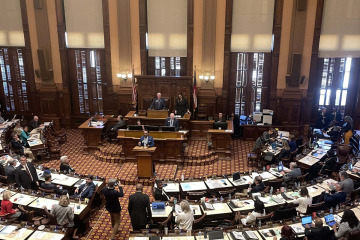
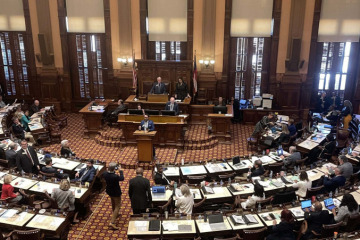
The council approved an increase in the operating millage rate from 2.74 mills to 3.85 mills — a jump of 1.11 mills that city officials say is essential to sustain basic services and cover a decade's worth of compounding cost increases. The vote took place June 23 at Brookhaven City Centre, with council chambers filled to capacity and residents spilling into an overflow room.
WHAT THE INCREASE MEANS FOR HOMEOWNERS
Under Georgia tax law, one mill equals $1 in taxes for every $1,000 of assessed property value. For a homesteaded property with a fair market value of $800,000, the annual city tax bill will rise by approximately $395. Owners of non-homestead commercial or investment properties valued at $1.575 million can expect an increase of roughly $764 per year. Homeowners with properties valued around $500,000 are projected to pay about $220 more annually.
The new rates will be reflected in tax bills arriving in August and November.
City officials were careful to contextualize the figures: the municipal portion of a property tax bill represents only about 7% to 8% of a homeowner's total bill. The 40% figure reflects the increase in the city's millage rate — not a 40% increase in the total tax burden a resident pays.
WHY OFFICIALS SAY THE INCREASE WAS UNAVOIDABLE
Mayor John Park, who championed the measure, said Brookhaven has held its millage rate flat since 2015 — an unusually long period of fiscal restraint that ultimately made a larger correction necessary.
“Our city of Brookhaven has not raised its operating budget millage rate for 13 years,” Park said in a statement ahead of the vote. “During the past decade, the Consumer Price Index increased by 37 percent, and most everything costs more.”
Park cited sweeping cost increases across core city operations: fuel, insurance premiums, healthcare coverage for city employees and contracted services. Among the most dramatic was a surge in 911 emergency dispatch costs from $200,000 to more than $1 million. City Manager Christian Sigman also pointed to steep increases in municipal building insurance costs.
The city adopted a $42.7 million general fund budget for fiscal year 2026 — a $4.5 million, or 11.8%, increase over the prior year. Police operations account for more than one-third of that spending.
The new millage rate is projected to generate between $6.5 million and $6.6 million in additional annual revenue, helping close the structural gap between the city's flat tax base and its rising obligations.
COMMUNITY REACTION: PACKED HALLS AND SHARP CRITICISM
Tuesday's meeting reflected the depth of public concern. Residents lined up during the public comment period to criticize the scale and timing of the increase.
“It was a 10-year problem that built up until now and then — snap your fingers — we're going to raise it 40% on everybody,” said one resident, capturing a sentiment shared by many in the crowd.
Another speaker compared Brookhaven's $80 million city hall to neighboring Chamblee's $8 million facility, calling the city's spending priorities into question. “I find it unbelievably insane that we can't exercise common sense,” the resident said.
Some residents with deep roots in the city said they simply want costs controlled. “I would like to see it stay at the lower rate,” said a Brookhaven homeowner who has lived in the city for 30 years.
New mother Allison Baildon, a nearly 10-year Brookhaven resident, said she is considering selling her home. “It is not going to be good for really anybody because money is tight for everybody right now,” she said.
Not all residents opposed the measure. Hannah Merriman said the city's visible upkeep justifies the cost. “I feel like the town itself is really well maintained and well-kept, and I do think the value of living over here is definitely worth what we pay,” she said.
OFFICIALS DEFEND THE DECISION
Mayor Park and council members acknowledged the difficulty of the moment but defended the vote as a matter of fiscal duty.
“We have a fiduciary responsibility to the health and safety and stability of Brookhaven,” Park said. “Our first duty is not just to the residents of today, but the residents of 50 years from now.”
Councilman John Funny echoed that position. “If we are to deliver the same level of service to our businesses and to our residents, we have to cover the cost to keep up with the level of service we're providing,” he said.
Park offered a pointed analogy: holding revenue flat for a decade, he argued, is the equivalent of a worker receiving no raise for 10 years — a real-terms pay cut as prices rise around them.
BROOKHAVEN IN CONTEXT
Despite the increase, Brookhaven retains the second-lowest residential millage rate in DeKalb County. Cities such as Milton (4.193 mills), Alpharetta (5.75 mills) and Suwanee (4.93 mills) all carry higher municipal rates.
The city also maintains a homestead valuation freeze for established residents, which has shielded longtime homeowners from rising taxable values but also limited the city's ability to capture revenue growth as property values climbed.
Brookhaven was incorporated in December 2012. Tuesday's vote marks the first millage rate increase in the city's roughly 13-year history.
WHAT'S NEXT
Residents who object to the new rate may appeal their property assessments through DeKalb County. Questions have been raised — so far without official response — about whether the city will revisit tax agreements with large institutional landholders such as Emory University and Children's Healthcare of Atlanta in future budget cycles.
Homeowners should expect the new millage rate to appear on tax notices beginning this summer.