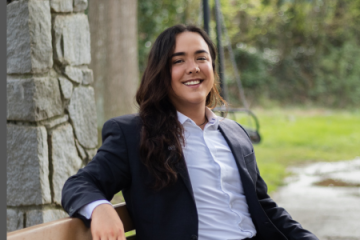
Sugar Hill, March 28, 2026 – After losing to incumbent Matt Reeves by just 621 votes in 2024 — the closest state House race in Georgia that cycle — Michelle Kang never stopped campaigning. By January 2025, she had already rebuilt her team and returned to the doors of District 99's neighborhoods in Suwanee, Duluth, and Sugar Hill.
“I cannot rest until I win the election,” Kang said. “We have a shared value and vision for how our district and Georgia serve the community.”
This spring, Kang is making her second run for the Georgia House of Representatives in HD-99, a district she describes as one of the most diverse in the state, with people of color comprising 60% of registered voters, including significant African American, Hispanic, Korean, Chinese, and Vietnamese communities.
Reaching AAPI Voters in Their Own Language
A centerpiece of Kang's 2025 strategy is expanding multilingual outreach ahead of the April 27 early voting start date. Her campaign website is available in six languages, and her door-knocking volunteers carry flyers printed in six language versions.
“When we knock on a Vietnamese household's door, we always hand them the flyer in Vietnamese,” she said, noting that Asian voters make up approximately 25% of District 99's electorate. The campaign is actively recruiting Korean, Chinese, and Vietnamese-speaking volunteers to lead community outreach before early voting begins.
Kang, a first-generation Korean American who moved to Georgia in 1992, says her background makes her uniquely suited to represent the district. “I'm one of you. I'm having the same trouble, having trouble paying the bill.”
Kitchen Table Issues: Housing, Childcare, and Taxes
Kang's platform centers on what she calls “kitchen table issues” — the everyday economic pressures facing working families. On housing, she proposes legislation to cap rent increases for apartment complexes, which she says are increasingly owned by a handful of large equity firms, and to regulate spikes in property insurance premiums that have burdened Georgia homeowners.
On property taxes, Kang takes a nuanced position that breaks with some in her party. Rather than eliminating property taxes outright — a proposal she calls unrealistic — she advocates for a graduated approach that provides relief to low- and middle-income homeowners while requiring higher-income households to continue contributing.
“If we're thinking about removing property taxes, we have to have a different architecture,” she said. “The high-income families need to take care of low- and middle-income families. They have their portion to pay.”
Universal childcare is perhaps her most personal policy priority. Having raised three children on her own, Kang says the cost of after-school care — which she says can reach $10,000 per child per year in some cases — is forcing parents, particularly mothers, out of the workforce.
She points to Georgia's $11 billion budget surplus as the funding source. “That's people's money,” she said. “The money is sitting over there and needs to be utilized to support young parents.”
Addressing the Tax Lien Allegation
During the 2024 campaign, Republican opposition groups circulated mailers alleging that a former business Kang co-owned carried a tax lien of nearly $90,000. Kang says the claim is misleading.
She explained that the lien dated back to 2006 and stemmed from a restaurant she operated jointly with her former spouse. Following their divorce, she left the business, and says her ex-husband failed to keep up with the tax filings. Kang says she has since obtained an official letter from the Georgia Department of Revenue confirming she personally owes no outstanding taxes.
“It was not me as a natural person — it was the business,” she said. “I have an official letter from Georgia Revenue Service. I don't have any tax owed, and it's forgiven.”
Making the Case Against an Incumbent
Kang acknowledges that HD-99 is an affluent district with many independent and ticket-splitting voters — a challenging environment for a challenger running to the left of the incumbent. Her argument is that the economic pressures of the current moment — rising rents, expensive childcare, immigration uncertainty — have reached households across income levels.
She also notes that the 2024 race saw 10,000 more total votes than the 2022 cycle, a sign she believes reflects genuine demand for change. “People want to elect the right people to represent them.”
On immigration, Kang says fear in the immigrant community has had a measurable economic effect on local small businesses, many of which have seen dramatic drops in foot traffic and revenue.
“That's why we have to have control in the state of Georgia,” she said, “and provide better benefits separate from the federal government — support the people living in Georgia.”
Her closing message deliberately sidesteps partisan framing. “The focus this year is not on any ideological agenda. It's all about our living — affordability. That right is being infringed on so badly right now.”
How to Vote
Early voting in the District 99 runs from April 27 to May 15, with weekend voting available on Saturdays and Sundays. Kang encouraged voters to cast ballots at the polling place nearest to their home or workplace.
“Everyone's voice needs to be heard,” she said. “It doesn't matter your income level, your background, or anything — your voice needs to be heard.”