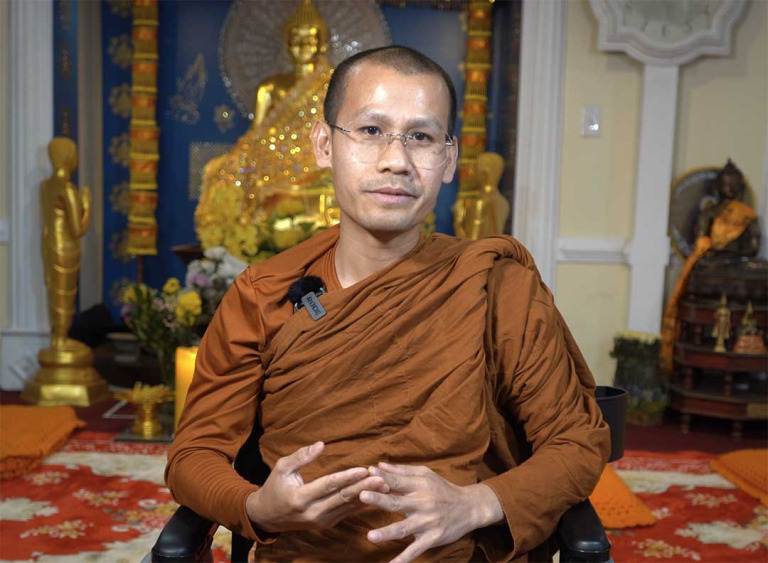
By Li Wong
The Buddhist monk heard the screech of brakes behind him but had no time to react. The impact sent him sprawling onto a Texas roadside one evening last fall, his left leg shattered beyond repair.
As chaos erupted around him—fellow monks crying, strangers rushing to help—Venerable Maha Ajarn Dam Phommasan did something remarkable: He stayed calm.
“I thought I died already, he recalls, sitting in a wheelchair at Wat Buddha Khanti in Snelville, Georgia, where he serves as an abbot. But I still had my mindfulness. I am not scared to die because I have my mindfulness.”
Six months later, the monk speaks about losing his leg the way most people discuss a change in weather—matter-of-factly, without self-pity. If anything, he seems more focused than before.
Nothing’s changed, he says of his physical condition. “Same mind and same body. But I have more focus and more concentration.”
From Laos to America
Maha Ajarn Dam’s journey to America began in Sebungwan village in Laos, where he grew up the fifth of six children in a farming family. His father was a quiet soldier; his mother, a farmer known throughout the village for helping neighbors.
At 7, when an elderly monk asked if he wanted to join the monastery, he said yes. His mother made him wait two years. At 9, he entered monkhood, knowing only one rule, “No dinner.”
Everything changed at 14 when he moved to Thailand to study Buddhist teachings and meditation at Wat Phitsoparam. “My father and mother born me in the physical body,” he says. “This gave me the second birth in my mind.”
After years of study, he earned the title “Maha” from Thailand’s King—an honor for monks who master the Pali language, Buddhism’s sacred language. In 2016, he came to America speaking only “yes or no” in English. Now, he leads meditation classes at Wat Buddha Khanti every Wednesday evening, teaching in both Lao and English.
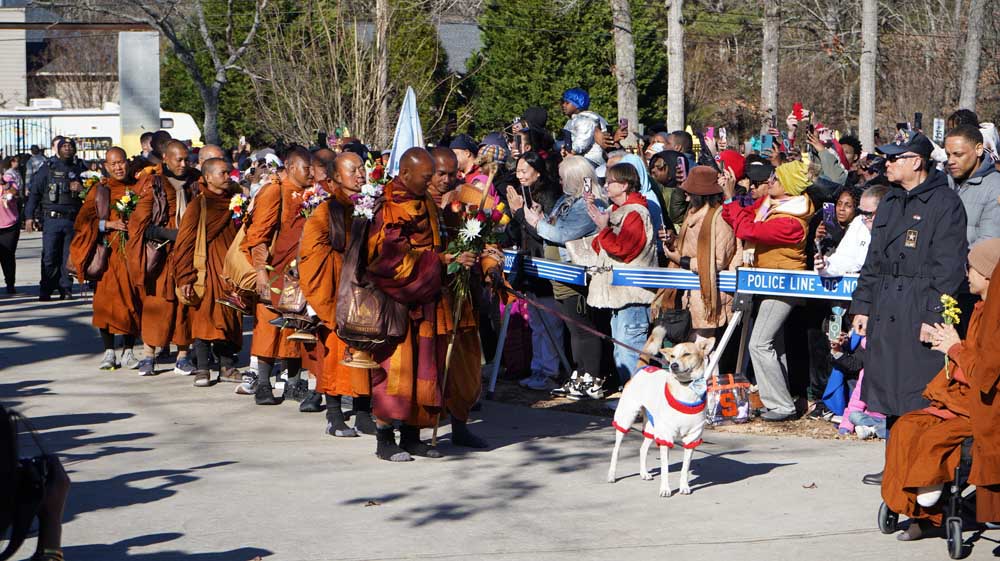
Walking for Peace
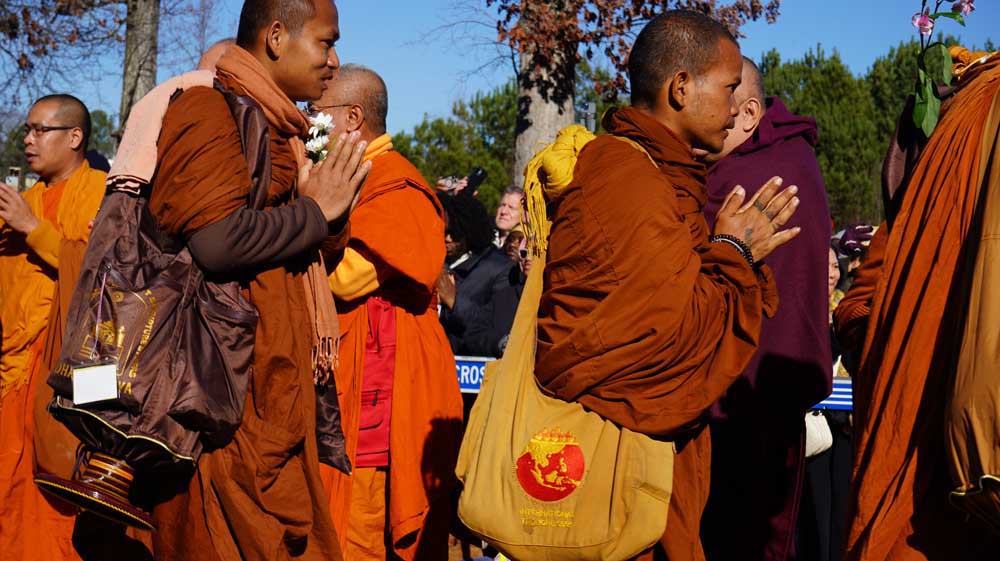
The Walk for Peace brings together monks who traverse America on foot, promoting mindfulness and compassion. For Maha Ajarn Dam, it offered something more – training.
“When we walk, we have many sufferings, we hurt our legs, under the sun, under the cold,” he says. “We have to train ourselves, body and mind.”
That training would be tested on a dark November evening near Houston. The group had walked with police escorts for days, but that night they were alone. Maha Ajarn Dam, despite painful blisters, pushed forward. Camp was just 15 minutes away.
Then came the truck.
I Offer My Leg
At the hospital, doctors gave him two options: amputation, quick but permanent, or multiple surgeries over one to two years with no guarantee of saving the leg. His bones and muscles were too damaged.
He chose amputation.
“When I lost my leg, I offered my leg to the good thing, to the big thing—to sacrifice for peace,” he explains. “It is like when we die on the battlefield.”
This reframing—from tragedy to offering—reflects decades of Buddhist practice. In meditation, practitioners learn to observe suffering without being consumed by it. Maha Ajarn Dam has mastered this to a degree few achieve.
During his hospital stay, he followed his fellow monks’ progress online as they continued the pilgrimage. When they visited during their return journey, the reunion moved him deeply.
“I never got that experience before in my life,” he admits. “I missed them so much.”
The Work Continues
Back at Wat Buddha Khanti in Snelville, life has resumed its rhythms. Maha Ajarn Dam focuses on his recovery while his board manages temple operations. His Wednesday meditation classes continue, drawing mostly Lao community members, though he hopes to attract more English speakers.
His message about the Walk for Peace hasn’t changed: “It’s the best thing to spread to everybody—to train their mind, to have peace in their heart.”
To supporters, he offers both gratitude and a teaching: “If you support the monks who walk for peace, your mind is open for peace to come into your heart.
The classic Buddhist philosophy—giving and receiving become one. By supporting peace in others, we cultivate it in ourselves.
Asked if he has found peace with his decision to amputate, Maha Ajarn Dam seems puzzled by the question. Of course, he has. It was never in doubt.
“Yes, he says simply. Then, after a pause, “We show you when we die on the battlefield, right? It’s the same.
He sits in meditation, one leg folded beneath him, the other absent. To him, nothing essential has been lost. The walk for peace continues, not with steps now, but with every breath, every teaching, every moment of mindfulness shared with students seeking their own inner calm.
In a world that measures loss in what can be counted—limbs, dollars, possessions- Maha Ajarn Dam offers a different calculus. Peace, he reminds us, isn’t found in what we keep but in what we are willing to give away.
Meditation Class
Wat Buddha Kanti holds meditation classes every Wednesday evening. Classes are taught in both Lao and English from July through September. All are welcome regardless of experience level.
For more information about the Walk for Peace movement, visit walkforpeace.org and www.WatLaoBuddhaKhanti.org