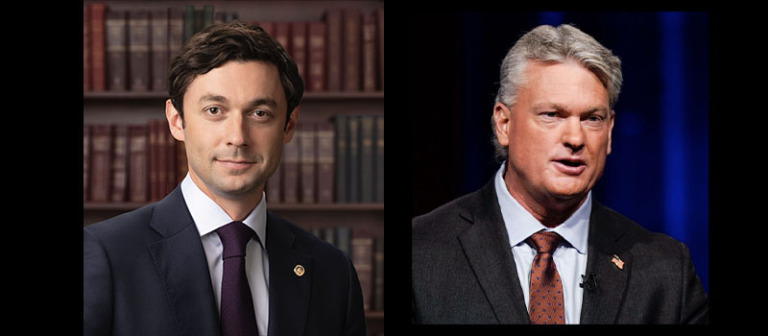
By Andrian Putra
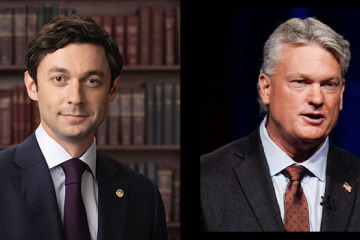
Atlanta, October 14, 2026 — Democratic Sen. Jon Ossoff and Republican U.S. Rep. Mike Collins met Tuesday night in their second and final debate before the Nov. 3 election. The two clashed over extremism, the war in Iran, immigration and the cost of living as early voting opened across Georgia.
The hourlong Atlanta Press Club debate at the Georgia Public Broadcasting studio in Midtown picked up where the candidates’ first meeting last week left off.
Early in the night, a moderator asked Ossoff whether he plans to run for president.
“I have zero interest in running for president,” Ossoff said, pledging to serve a full six-year term if reelected.
Collins dismissed the answer and said Ossoff would become the Democratic Socialists of America’s candidate. He also accused the senator of being a weak ally to Israel and of chasing a national profile at the expense of Georgians.
The sharpest moment came when a moderator asked Collins directly whether he is a white nationalist and what he would say to Black Georgians who question whether he would represent them fairly. Ossoff has repeatedly pointed to Collins’ son-in-law, an online influencer reported to have posted antisemitic and white nationalist content from Collins’ property.
Collins said he condemns hate speech and antisemitism in all forms. Ossoff pressed him to promise that no more neo-Nazi propaganda would come from his home before Election Day.
“I’m a little tired of this,” Collins replied. He blamed Ossoff’s rhetoric for threats against his family, including from a man now jailed on charges of threatening to kill Collins and his son-in-law.
Collins then turned to Ossoff’s endorsement of Michigan Senate candidate Abdul El-Sayed, citing El-Sayed’s ties to left-wing streamer Hasan Piker. Collins also criticized Ossoff for accepting donations from tech investor Reid Hoffman, whose name appears in the Jeffrey Epstein files. Ossoff responded that Collins had voted against an earlier effort to release those records.
Collins said he has fully cooperated with a House Ethics Committee investigation into his office.
On foreign policy, Collins defended President Donald Trump’s war with Iran as necessary to keep the country from obtaining a nuclear weapon. Ossoff disputed claims of success there, citing the deaths of 21 U.S. service members, and tied Collins to the war and to Trump’s tariffs.
The candidates also sparred over immigration. Collins, the lead author of the Laken Riley Act, called Ossoff weak on the border. Ossoff noted he was one of 12 Senate Democrats who voted for the law. Collins also faulted Ossoff for opposing the SAVE Act, a proposal that would require proof of citizenship to register to vote. Ossoff said Collins and Trump remain focused on overturning the 2020 election.
On artificial intelligence, Ossoff called it possibly the most complex issue facing lawmakers and said federal inspectors should be placed in AI labs. Collins framed AI as a race against China and said data centers should pay for their own infrastructure without burdening nearby communities.
Near the close, moderator Donna Lowry asked how each candidate would bring down grocery and gas prices. Collins used his time to list ways he said Ossoff had made life more expensive. Ossoff countered that Collins never answered the question.
Both candidates skipped questions from reporters after the debate.
Ossoff, seeking his first reelection, has led in public polling since the summer. Early voting runs through Oct. 30.