Beijing, September 8, 2025 — In a moving ceremony in Beijing last week, Lani Wong, Chairwoman, the National Association of Chinese Americans, accepted one of China’s highest commemorative honors on behalf of her late father, recognizing his courage as part of the Allied effort in the brutal Japanese invasion during World War II.
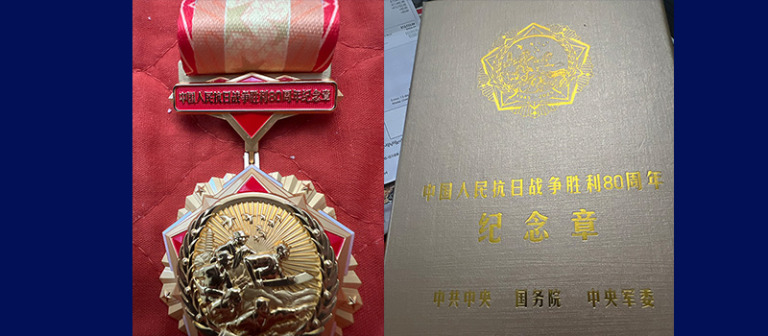
Wong was among 16 individuals from several nations bestowed with the “Commemorative Medal for Contributions to the Victory in the War Against Japanese Fascists.” The awards, presented by China’s State Council, marked the 80th anniversary of the end of the Second World War and paid tribute to a generation of international veterans and civilians whose efforts are often less chronicled in the West.

The medal was presented by Chen Xu, Minister of the Overseas Chinese Affairs Office, who thanked the recipients and their families for the “historic contributions and tremendous sacrifices” made in the fight against aggression.
“To receive this on behalf of my father is incredibly profound,” Wong said following the ceremony. “It’s a recognition that his story, and the stories of so many others who served in that forgotten corner of the world, still matter. It connects our family’s history to a much larger, global narrative of resilience.”
Her father was honored posthumously for his perilous work along the famed supply routes between China and Burma—a critical lifeline known as the “China Burma India Theater.” This network, which included the treacherous Himalayan “Hump” air route and the Ledo Road, allowed the Allies to transport vital munitions, fuel, and supplies to Chinese forces resisting the Japanese invasion. Those who operated the routes faced immense danger from enemy fire, treacherous mountain passes, and punishing jungle conditions.

The ceremony highlighted the truly international coalition that fought in the region, with honorees hailing from the United States, Tahiti, Australia, Singapore, Thailand, Jamaica, and Malaysia. Many of the recipients were civilians or volunteer service members who provided logistical support, intelligence, or medical aid.
For Wong, the medal is a tangible link to a father who spoke little of the war’s hardships but whose actions defined a lifetime of service.
“He was a humble man who believed he was just doing his part,” she said. “This medal is a testament to the courage of all the unsung heroes who ensured that the lifeline remained open. It’s a piece of history I am proud to hold for him.” – Georgia Asian Times