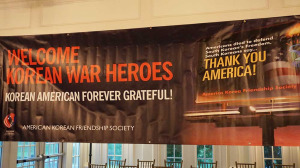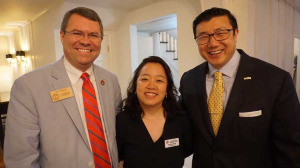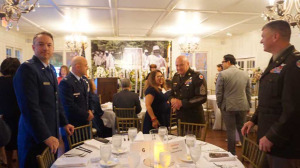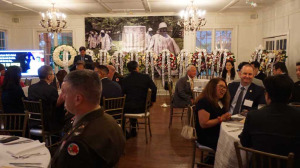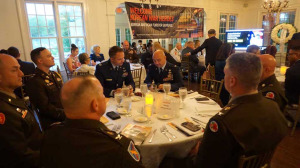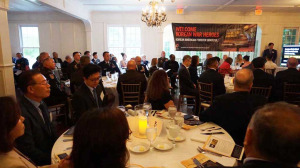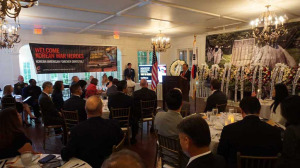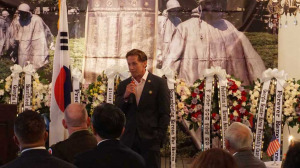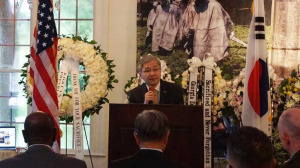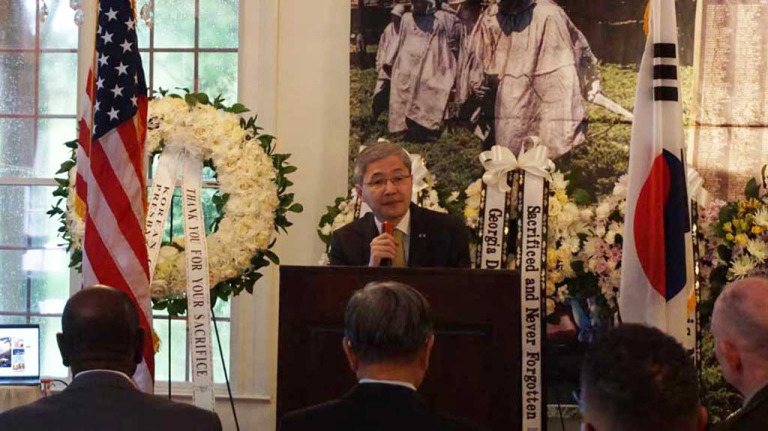
Duluth, July 25, 2026 — Members of Georgia’s Korean American community, elected officials, and military leaders gathered on July 24, 2026, for the 2026 Korean War Armistice Day Commemoration Wreath Laying Ceremony, a solemn tribute to the American and Korean service members who fought and sacrificed during the Korean War.
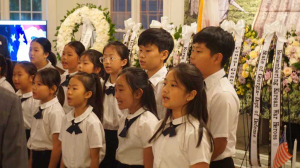
The program opened with a moving performance of the national anthems of the United States and the Republic of Korea, sung by the Children’s Choir of Korean Community Presbyterian Church, whose voices set a reflective tone for the morning’s proceedings.
The ceremony started with a formal wreath-laying, a solemn gesture symbolizing remembrance and gratitude for the more than 36,000 American service members who lost their lives during the Korean War, including the 740 soldiers from Georgia alone, along with the countless Korean soldiers and civilians who defended their homeland.
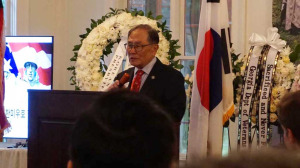
Sunny K. Park offered remarks remembering the Korean War, calling on attendees to honor the courage of the men and women who served and to preserve their legacy for future generations.
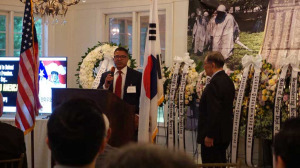
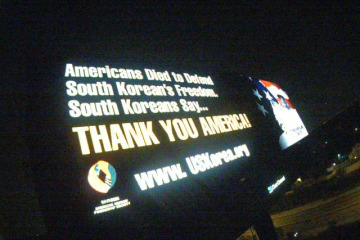
Consul General of the Republic of Korea in Atlanta, Joon Ho Lee, followed with special remarks expressing South Korea’s lasting gratitude toward American veterans, whose service more than seven decades ago helped safeguard the freedom and prosperity the country enjoys today.
U.S. Representative Rich McCormick, who represents Georgia’s 7th Congressional District, delivered remarks highlighting the importance of continuing to honor Korean War veterans and reaffirming the strength of the U.S.–South Korea alliance.
Major General Richard DeWayne Wilson, Adjutant General for the State of Georgia, delivered the ceremony’s keynote address, paying tribute to the bravery of Korean War veterans and noting that 740 Georgia soldiers gave their lives during the conflict, a sacrifice he called a permanent part of the state’s history and character.
Organizers noted that the annual commemoration continues to serve as an important reminder of the sacrifices made during what is often called the “Forgotten War,” and of the enduring friendship between the United States and the Republic of Korea that has grown from it.